

For end-user gamers and Youtubers, there’s one conversation that’s dominating the GPU market 2026: NVIDIA’s GeForce RTX 50-series. A deep dive into the Blackwell architecture, these cards didn’t just beef up performance; they shifted the entire architecture of how we render graphics, employing AI to deliver frame rate and visual fidelity it otherwise only felt possible just a couple of years ago. If you’re interested in the ultimate GPU 2026, that is clearly the answer in this assortment. We’ll demonstrate why the 50-series could be the last stop along the upgrade highway and why other graphical options simply can’t match it.
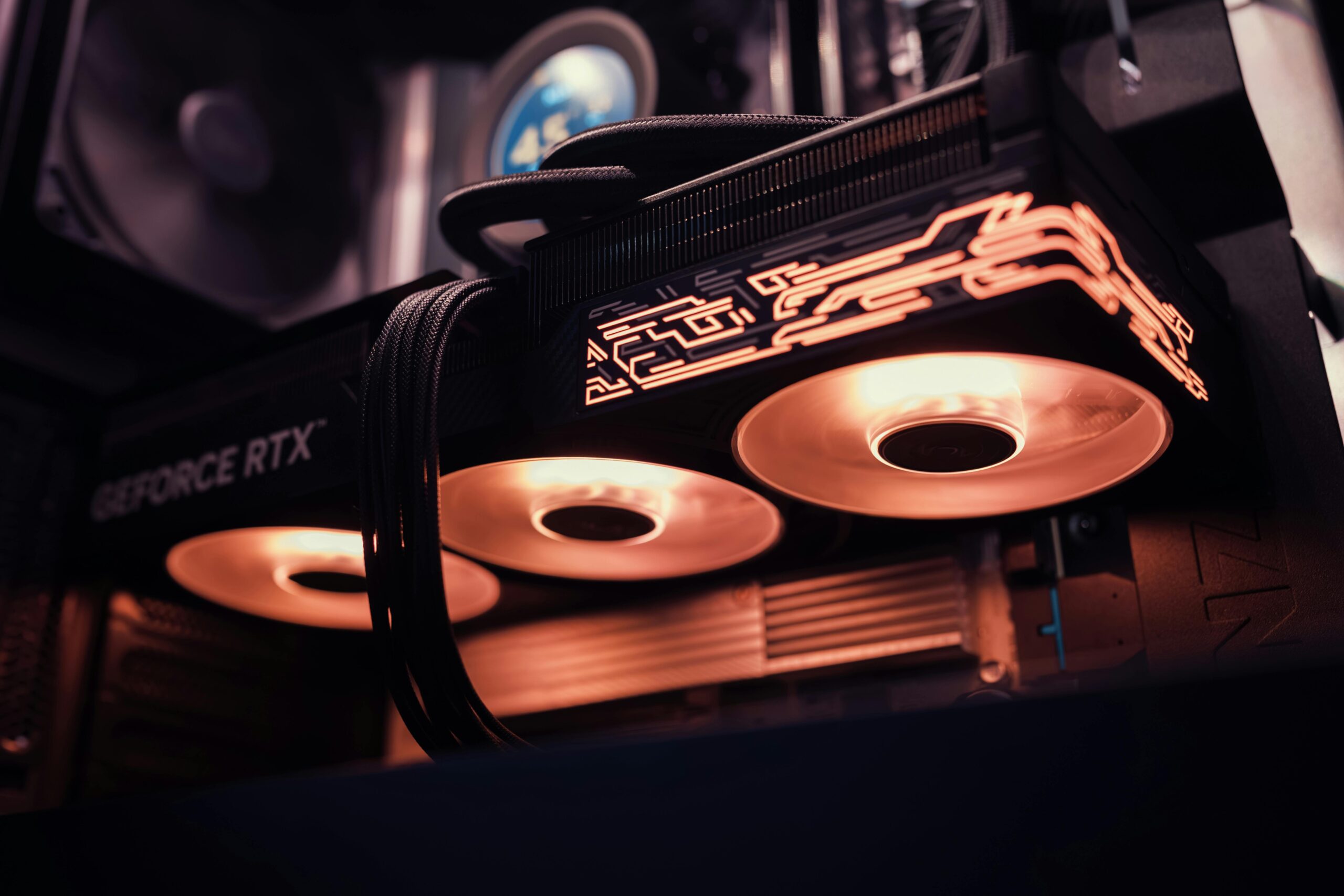
1. The Blackwell Revolution: Core Architecture
The jump from the RTX 40-series (Ada Lovelace) to the RTX 50-series (Blackwell) marks the point where the design philosophy is AI-acceleration and deep commitment to it defines the core of the evolution. Blackwell introduces fifth-generation Tensor Cores and fourth-generation RT Cores in the RTX 50 series.
With this design, it is more than raw core number; it is also efficiency. The flagship RTX 5090 is built with over 92 billion transistors to boot, and the GPU-based GDDR7 Memory is the new speeder delivering a massive memory bandwidth (up to 1,792 GB/s), the most massive GPU-based RAM I recall.
That means that textures load more quickly and rendering pipelines remain charged, and the overall experience is a lot smoother, particularly when you’re working to drive up demanding resolutions at 4K and 8K. This is the new low-hanging fruit for what a premium desktop experience should feel like.
2. The AI Pro: DLSS 4 and Neural Rendering
The real magic of the RTX 50-series is its suite of AI technologies, which make it arguably the best RTX 2026 of all time.
DLSS 4 Multi Frame Generation. The main face in the matter is DLSS 4. It works on a transformer model architecture with Multi Frame Generation and can generate up to 3 AI-generated frames for each frame rendered by the GPU. This translates to an as much as 8× performance boost over traditional rendering, turning previously untouchable path-traced games into clean, high-frame-rate showcases. For gaming enthusiasts, this isn’t an environment, this is an imperative.
RTX Neural Shaders. This technology adds tiny AI networks into the programmable shaders themselves – it allows “film-quality materials, lighting, and more in real-time games”. The result is stunning realism, where generative AI for RTX Neural Faces will cut down on artifacts and generate much more expressive, life-creating digital characters. For game analyst Youtubers focusing on cinematic content, this is the fidelity standard of the future.
3. RTX vs. Ryzen: This Integrated graphics isn’t Competing
One of the most typical questions we continue to get asked is just how well do discrete GPUs perform compared to powerful modern CPUs like AMD Ryzen ones that also come with fairly competent built-in Radeon graphics. Just to be clear, the RTX 50-series isn’t really a competition for integrated graphics but a way to not consider integrating those graphics for work at scale.
Ryzen’s integrated RDNA-based GPUs are great for lower power media consumption or for entry level 1080p gaming, yet they provide a gulf in performance. The RTX 5070, the entry point for the high-end tier, provides dedicated RT Cores with a VRAM (12GB GDDR7), the AI power-heavy DLSS 4 or whatever else you would like you don’t have with the integrated graphics tier.
It is exactly why for anything in any kind of high-resolution display, video editing or genuinely 4K gaming that needs the ability to play gaming you can only have a dedicated RTX 50-series card here.
| GPU Model | Launch Price (MSRP) | Key VRAM/Bus | Typical TDP | Target Resolution |
| RTX 5090 | $1,999 | 32GB GDDR7 / 512-bit | 575W | 4K Ultra / 8K |
| RTX 5080 | $999 | 16GB GDDR7 / 256-bit | 360W | 4K High |
| RTX 5070 | $549 | 12GB GDDR7 / 192-bit | 250W | 1440p Ultra / 4K Entry |
4. Final Judgement: Which 50-Series Model is Worth It?
At this point, the best GPU of all time is usually the best fit and on-budget, however, the performance per dollar of the 50-series is extraordinary. RTX 5090: The ultimate no-compromise player.
For professional Youtubers making rich 3D pictures or large video gamers looking for 4K at 144Hz along with complete ray tracing, this card trumps all. RTX 5080: The perfect sweet spot. It gives amazing performance that usually doubles the frame rates of the preceding generation, and is the most logical upgrade for most fans. RTX 5070/5070 Ti:
The real value propositions. These cards really do reconfigure 1440p gaming and provide a comfortable entry point to 4K gaming with DLSS 4 integrated.
NVIDIA. “Blackwell Architecture Deep Dive: Fifth-Gen Tensor Cores and GDDR7.” (Official Tech Briefing)
TechPowerUp. “GeForce RTX 5090 Specs and GDDR7 Bandwidth Benchmarks.” (GPU Database/Technical Review)
Digital Foundry. “DLSS 4 Multi Frame Generation: Up to 8x Performance Boost in Path-Traced Games.” (Performance Analysis)
Hardware Unboxed. “RTX 5070 vs. Ryzen Integrated Graphics: The Performance Chasm.” (Comparative Review)
PC Gamer. “RTX Neural Shaders and the Future of In-Game Character Realism.” (Feature Analysis)